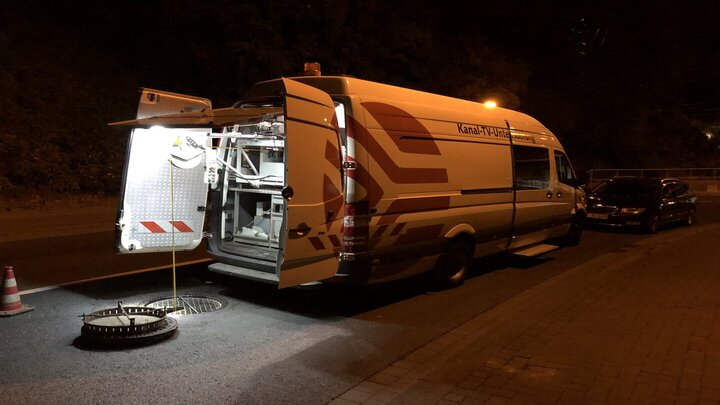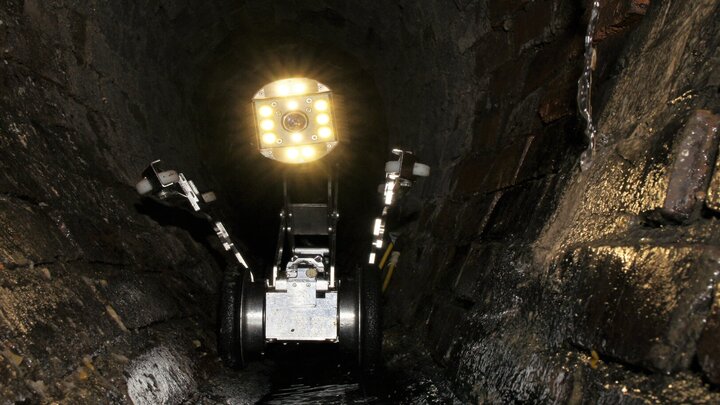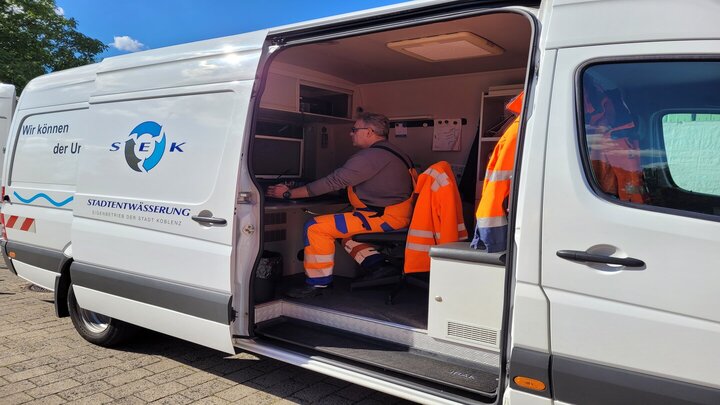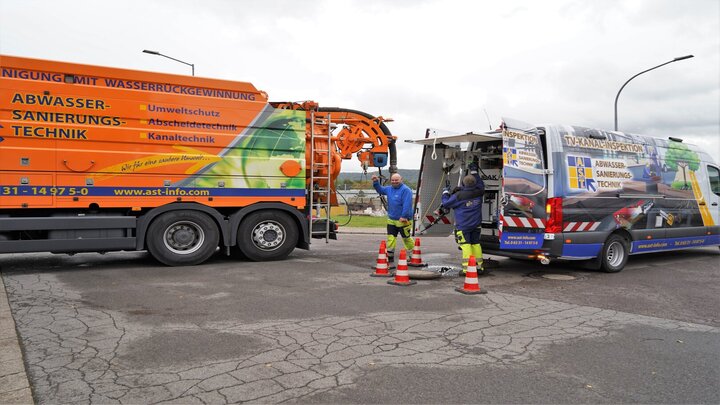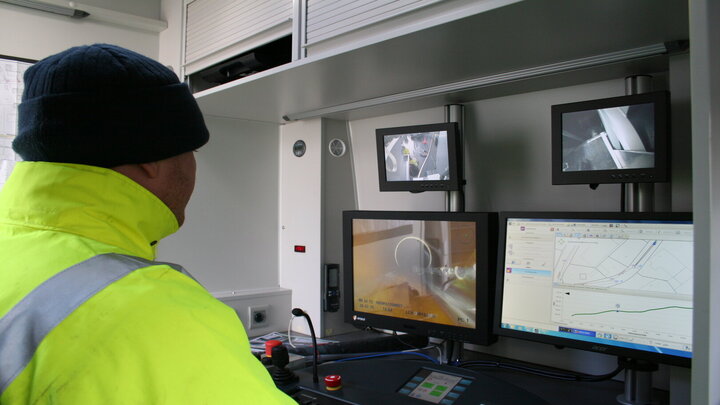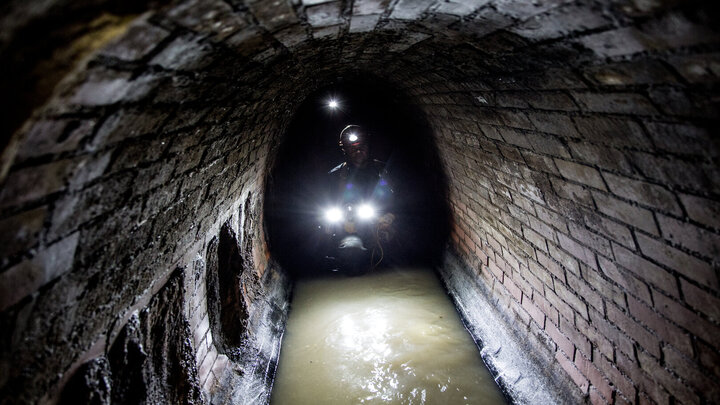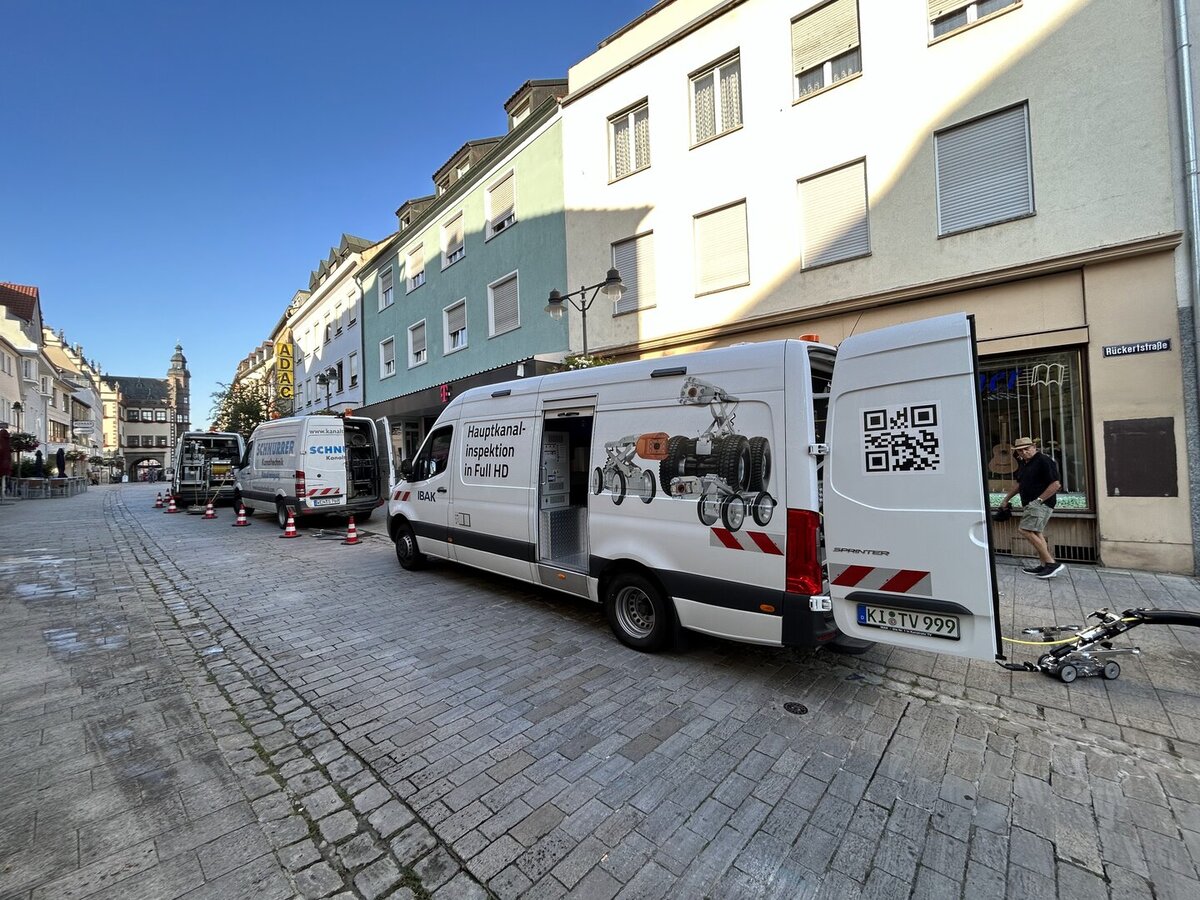
Inspection starting from the main sewer with the latest generation LISY 4 satellite system under demanding operating conditions.
LISY inspects from the main sewer
Systems and technologies involved
- Satellite system LISY with LIFT, LateralGuides and egg-profile carriage
Job
Schweinfurt is an urban municipality in the administrative district of Lower Franconia in Bavaria and has a population of more than 54,000. In Schweinfurt, some 20,000 m³ of sewage is produced per day. The Schweinfurt Sewage Department has been a municipal enterprise of the City of Schweinfurt since 1996. They commissioned Schnurrer Kanaltechnik GmbH (Schnurrer) from Weiden with the inspection of a total of 27 km of main sewers with diameters of DN 150 to DN 2800. The irregular sizes and large-diameter pipes (with ovoid cross-sections of 700/1050 to 1500/2250 and irregular profiles of 500/962 to 1029/1800) extend for a distance of four kilometres.
The Rückertstrasse in the historic city centre needs a new surface in the middle as there is a heavy strain on this area: some 145 buses drive over the road surface each day. Rehabilitation measures may also be necessary in the pedestrian zone. Because of this, Schweinfurt Sewage Department required the results of the TV inspection quickly for further planning and accordingly prioritised the main sewer underneath it with a length of 325 metres. So Schnurrer started the sewer inspection with the seven reaches of brick-built sewers with an ovoid cross-section of DN 800/1200.
Challenge
"The reaches are located directly by a pump station that switches on roughly every 10 minutes. This means that we are continuously confronted with sewage flowing at a high speed during operation," inspector Rudolf Ambrosch explains. "If we had shut off the sewer, we would only have been able to work for an hour at the most, then we would have had to wait half an hour. That wouldn’t be efficient," the Schnurrer employee continues. In any case, fast work was required, so as not to hamper the bus and other road traffic and to provide the inspection data promptly as a basis for planning. "Along the way, there are lots of difficult 90-degree bends in the laterals, because the public sewer was reinstalled at a lower level years ago. Some of the bends go upwards by an angle of even more that 90 degrees, run on that level for roughly 3 metres and then return to the horizontal so that they come back to the old sewer," Peter Kreinhöfner, the responsible Schnurrer engineer explains. In view of this background, bend-negotiating capability is an essential requirement on the equipment used.
Solution
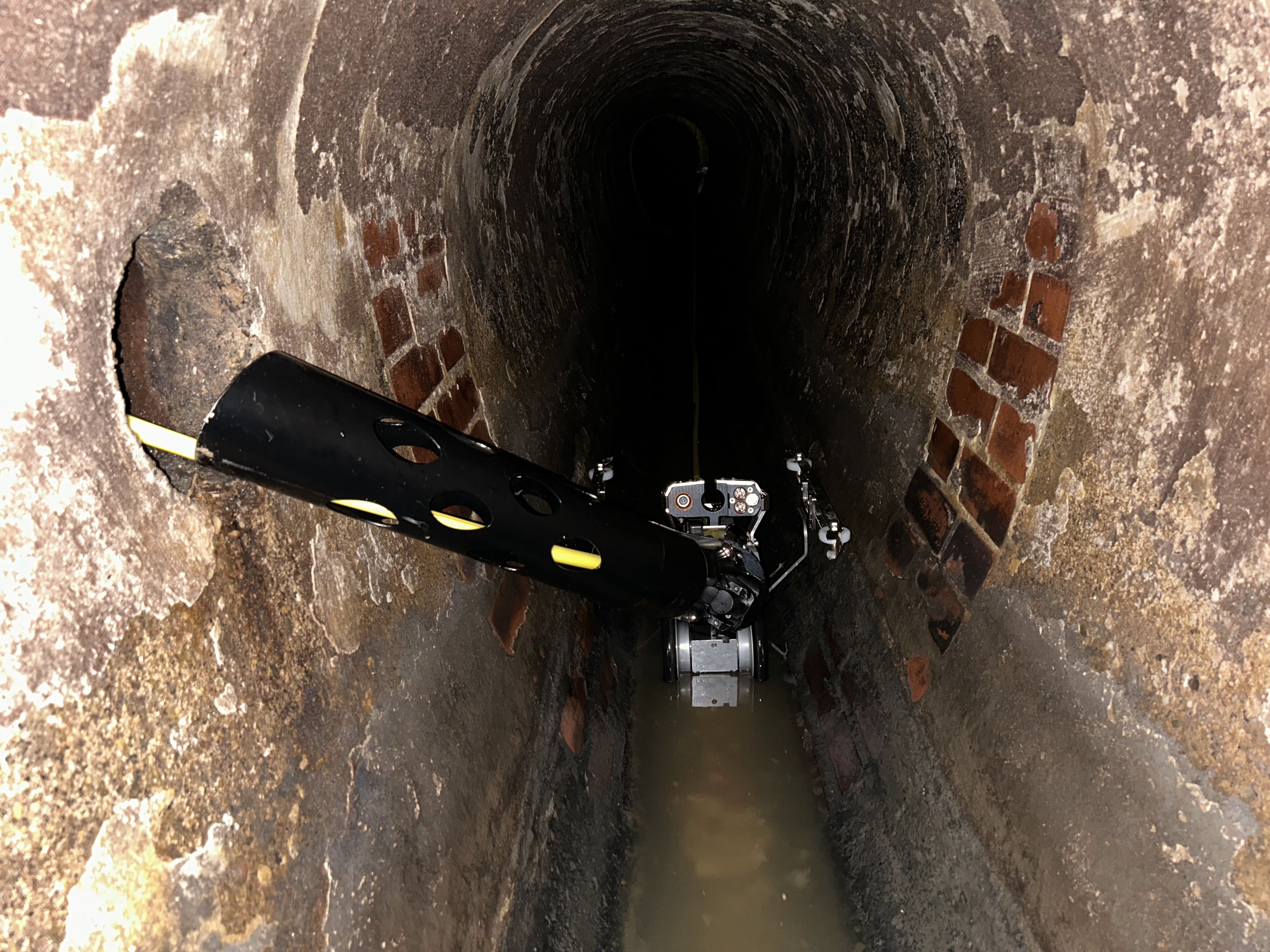
IBAK implemented the deployment range of up to DN 2000 among other things with a new funnel concept, the LateralGuides, the LIFT and an elegant insertion curve that optimally guides the push rod. This was used extensively in Schweinfurt in challenging conditions. Over the distance of the 325 metres, 54 laterals with diameters of DN 150 to DN 200 were inspected from the main sewer with the ORION. The laterals were mainly in the 10 o‘clock and 2 o’clock position. "Part of the inspection was performed with our LISY in flushing mode; we inspected the greater part with the LISY 4 in push rod operation," Ambrosch reports.
Result
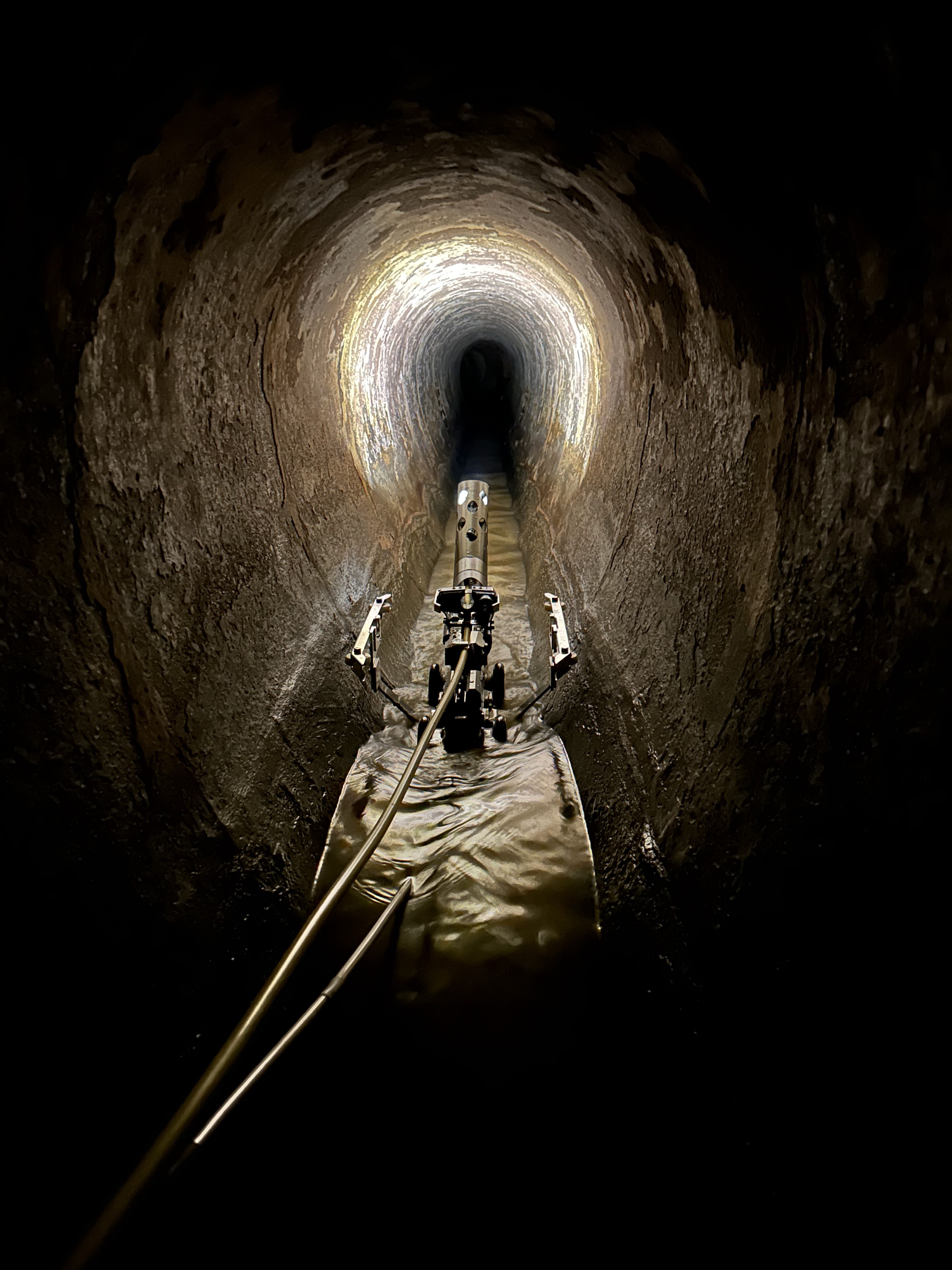
The LISY 4 could be lowered into the sewer fully mounted with the LIFT, the funnel and the ovoid profile carriage. The exact position of the ORION 3 HD could be seen via the control camera, and this helped Ambrosch to insert and advance the inspection camera. "We were able to ascertain a definite difference to our existing system: with the LISY 4, the funnel remains stable in the pipe even in difficult conditions." The push rod could be guided into the lateral in a more controlled manner. This is achieved by a harmonious overall curve from the invert into the lateral. Thanks to this harmonious curve, the push rod is optimally guided, so that the propulsion power is almost entirely available for propulsion into laterals. This is clearly shown by this practical operation: "It really went fantastically well. I was very surprised how far we got into the laterals. We got in further than with our LISY in flushing mode. In some cases, we got up to 20 metres into the laterals in spite of the 90-degree bends. Without flushing, I would never ever have managed that in these operating conditions with the old system," the experienced inspector affirms.
That the rotary drive with which the funnel is swivelled to the entrance of the lateral keeps the funnel actively in position was particularly convincing. Inspection lengths of up to 22 metres could be achieved without flushing with the LISY 4, whereby 90-degree bends had to be negotiated. In spite of difficult operating conditions – such as water flowing a high speed – there was never any danger of tipping. In direct comparison, Schnurrer ascertained it was possible to work faster with the LISY 4.
Company introduction

Since 2010, the sewer technology sector has been an independent company spun off from Josef Schnurrer GmbH & Co. KG, a manufacturer of concrete pipes and concrete and reinforced concrete prefabricated parts. With 15 employees in the field, the company operates approximately to an equal extent in the two sectors sewer inspection and sewer rehabilitation. Another five people are employed in the office. Rudolf Ambrosch has worked for Schnurrer as an inspector for over 10 years. The qualified concrete and reinforced concrete worker does not regret having moved to the sewer inspection industry: “Only sitting in the office wouldn’t have been my cup of tea. An inspector’s job is very varied: sometimes you are inside and sometimes outside.” The 63-year-old has given some thought to the young people starting work in the industry: “The job is becoming more complex, you mustn’t be afraid of working with software and in spite of everything that’s new, you need an eye for proportions and you also have to be prepared to get dirty now and again. The work has changed, you don’t go down manholes nearly so often nowadays as you used to. But now as ever there are situations where it is necessary.” Schnurrer trains people to qualify as pipe, conduit and industrial service technicians and is also on the lookout for reinforcements for the team; career changers are also welcome. The new team member can then actively accompany the further progress of the interesting project in Schweinfurt.
It is already certain that the latest generation of the LISY will be used: after this successful test in practical operation, Schnurrer decided to purchase a LISY 4 and to perform this and many other jobs optimally with it.